


US


Type your search inquiry above
This Cootamundra bridge replaced a deteriorated timber overbridge, removing safety risks and future-proofing the rail corridor for more freight.
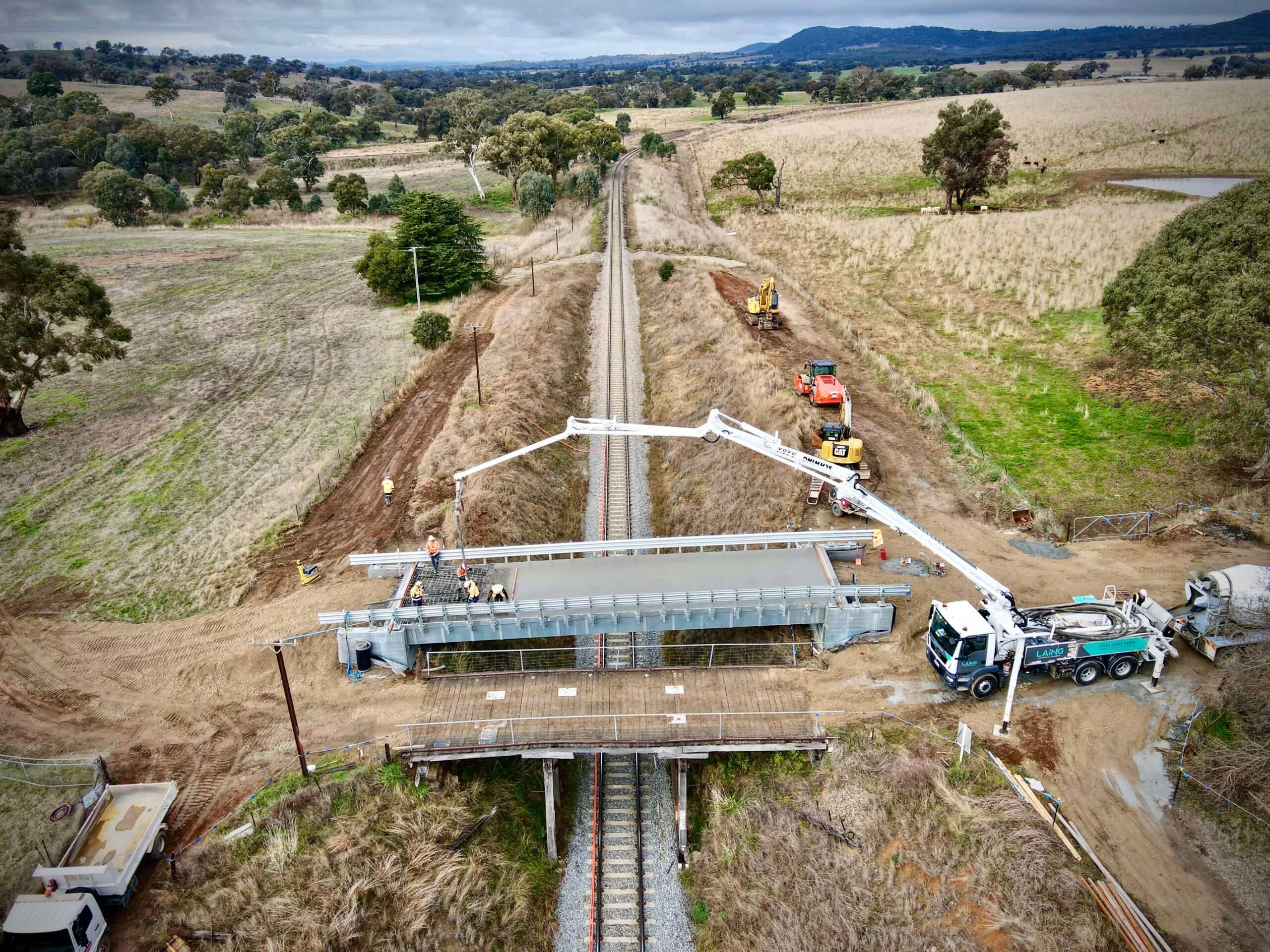
To address escalating safety concerns, the deteriorating timber overbridge was reconstructed to deliver a modern structure over an active railway.
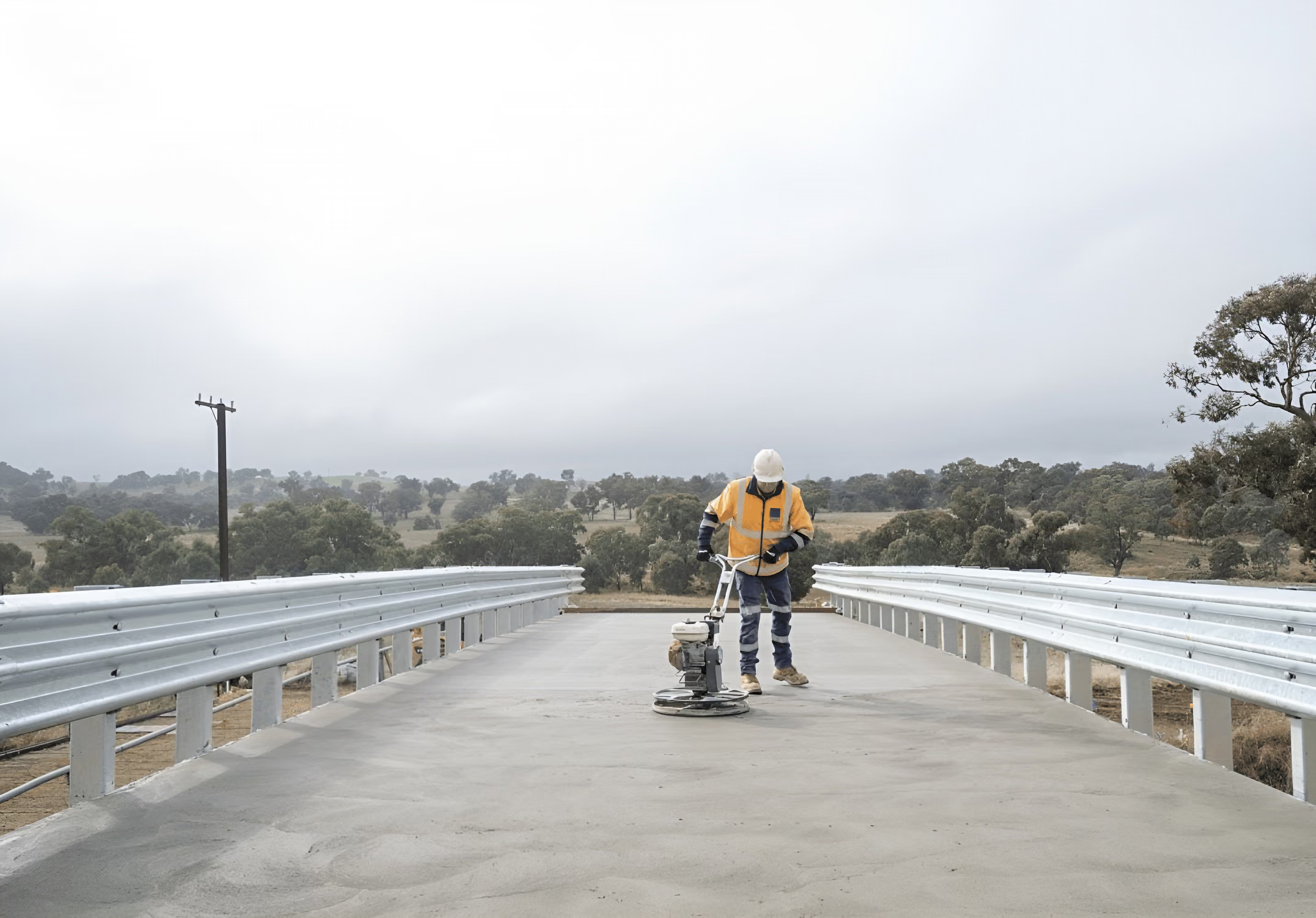
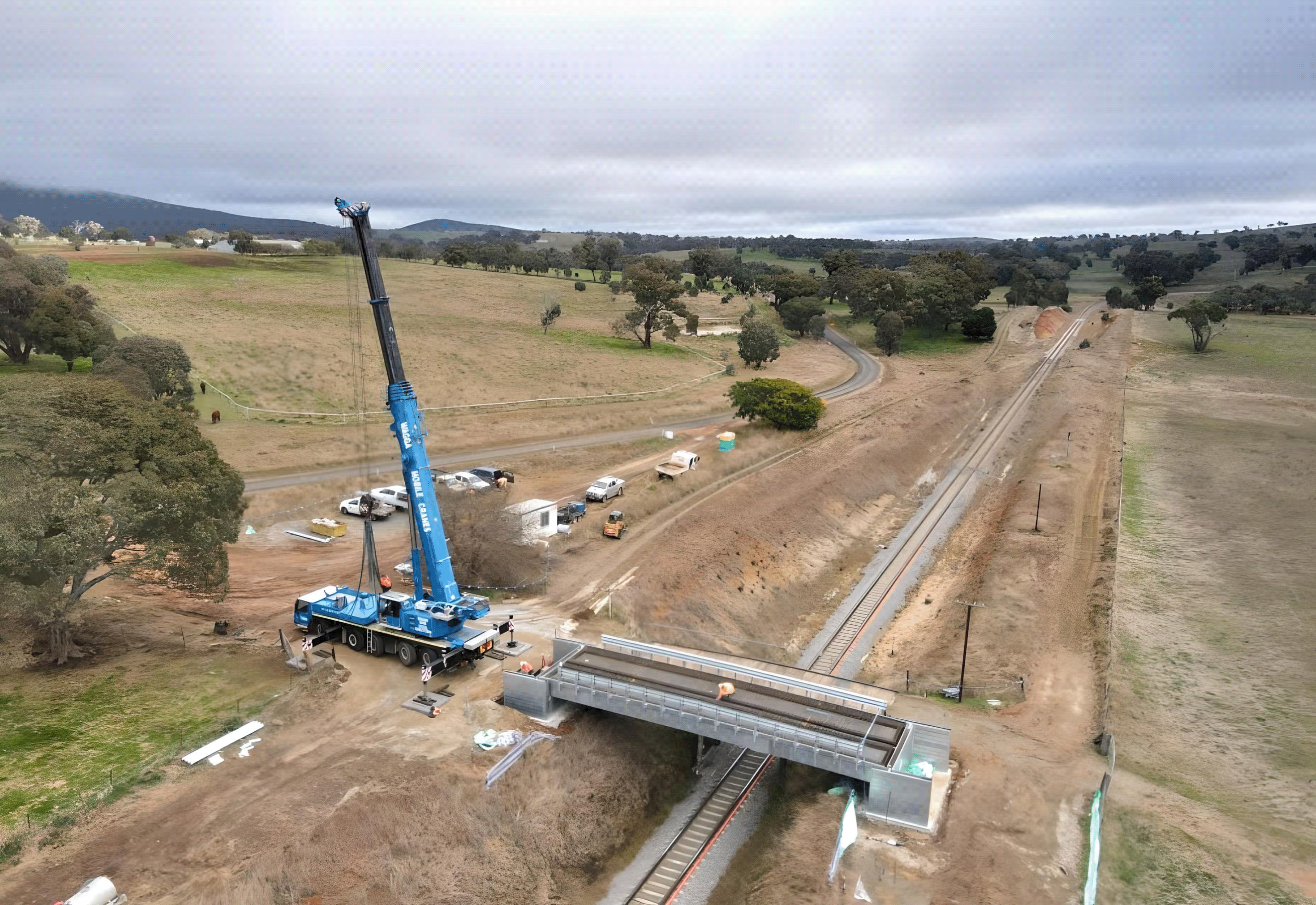
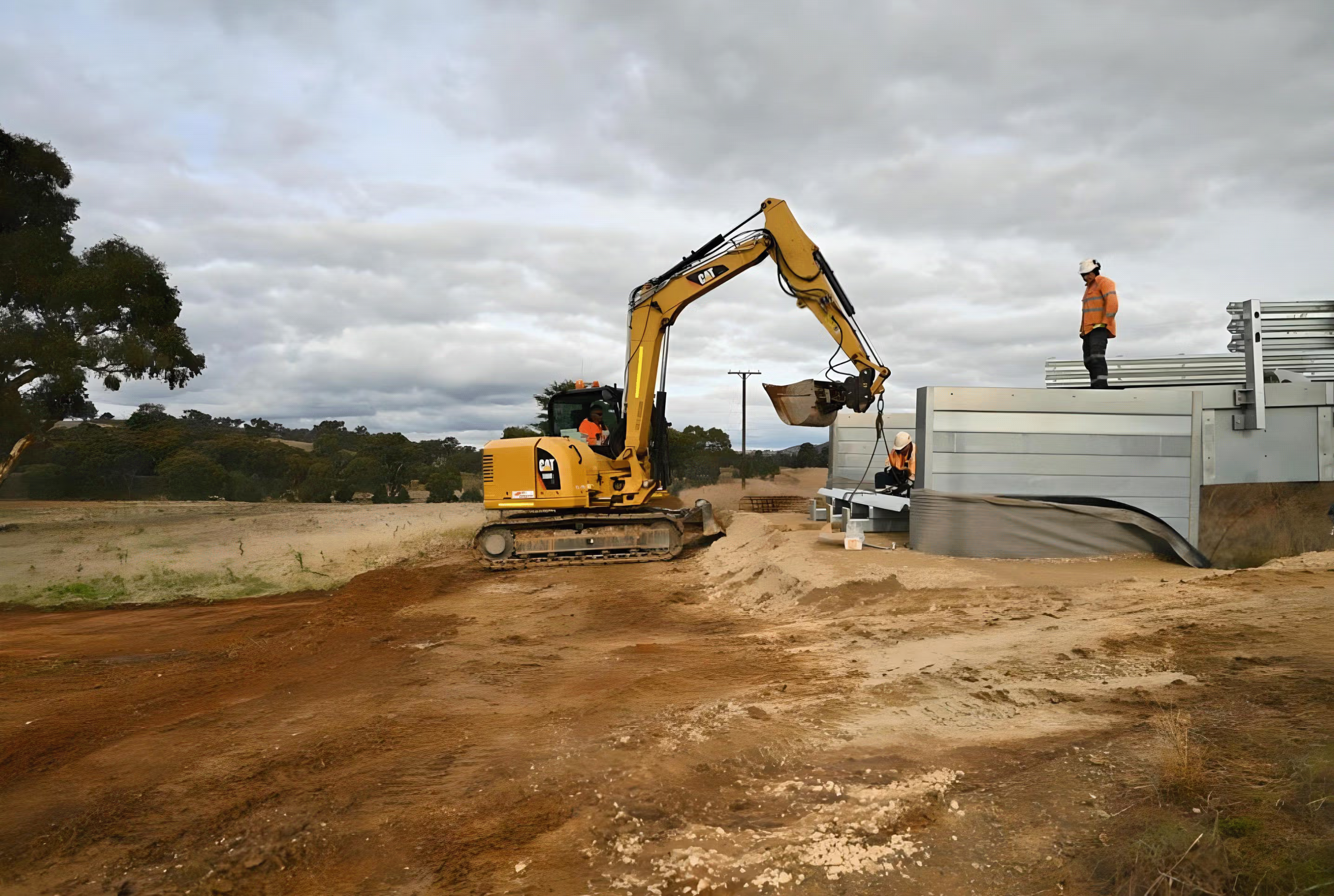
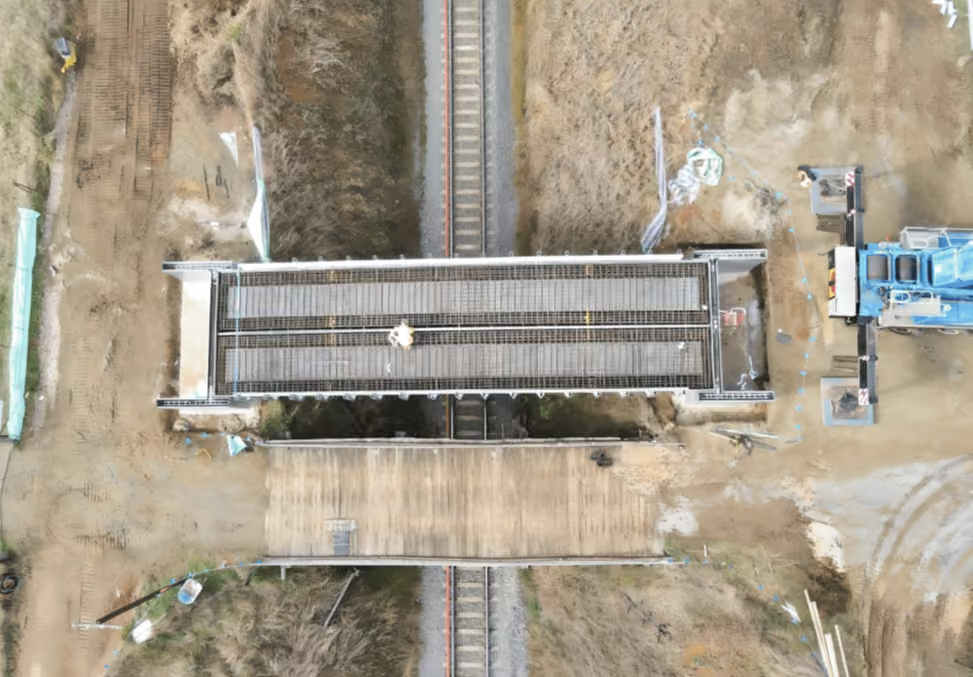
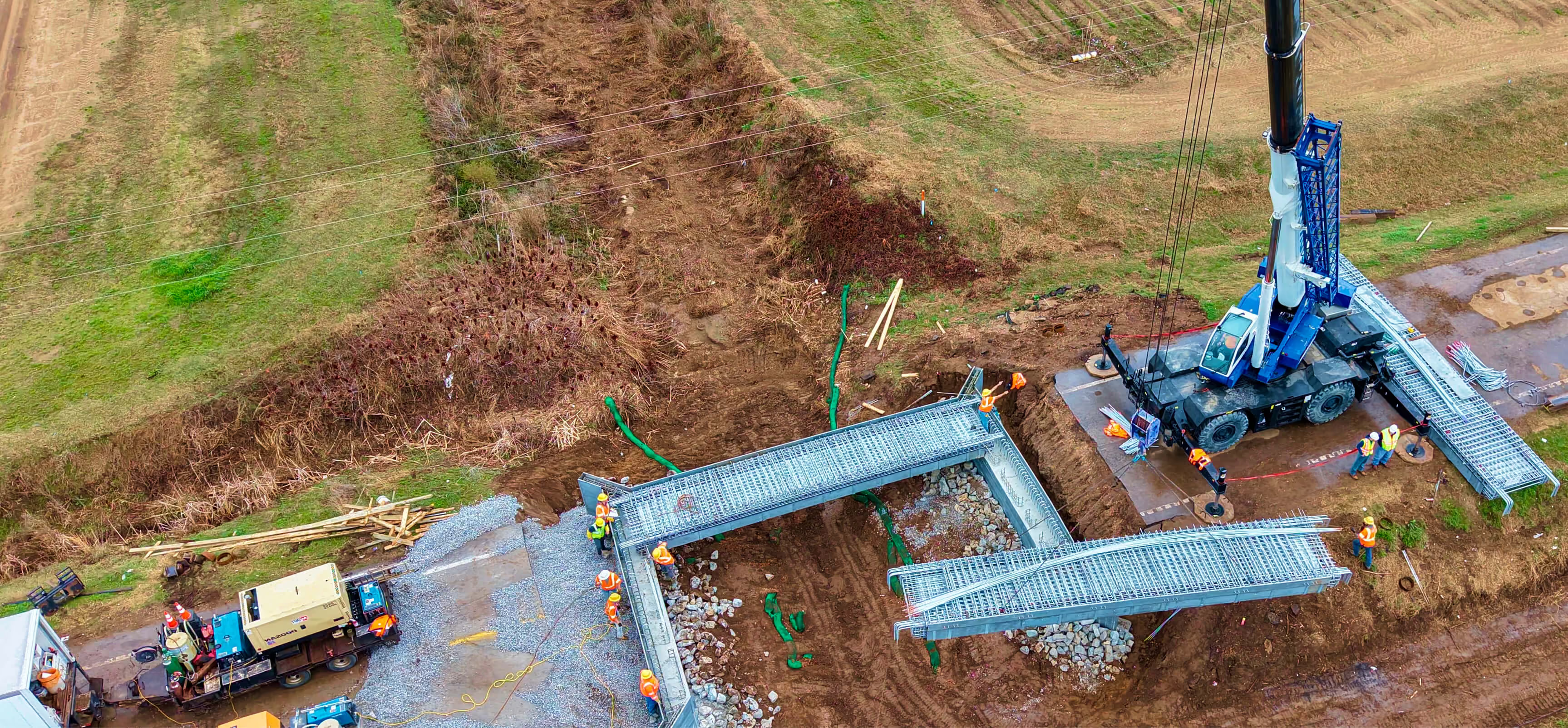

The Frampton Road bridge sits between Junee and Cootamundra in regional New South Wales, within ARTC’s extensive 8,500 km rail network.
The area supports significant freight movement and regional connectivity, making safe road‑over‑rail infrastructure essential.
Its rural setting required a construction approach that balanced efficiency with strict rail safety requirements.

The existing timber bridge had deteriorated significantly, creating safety hazards for vehicles and the rail line beneath.
ARTC also required a simply supported design that could be raised in future to accommodate double‑stacked container trains.
Working over a live rail line meant the project needed to avoid line possession, minimize disruption, and meet strict audit and safety standards.

InQuik’s semi‑modular system enabled rapid installation over the live rail corridor without requiring shutdowns, reducing operational impact.
Lightweight components and in‑situ pouring allowed flexible crane selection and efficient construction by a small, skilled crew.
The resulting Magnelis®‑protected structure provides long‑term durability, compliance with ARTC audit requirements, and a future‑ready design that supports ongoing network upgrades.
